
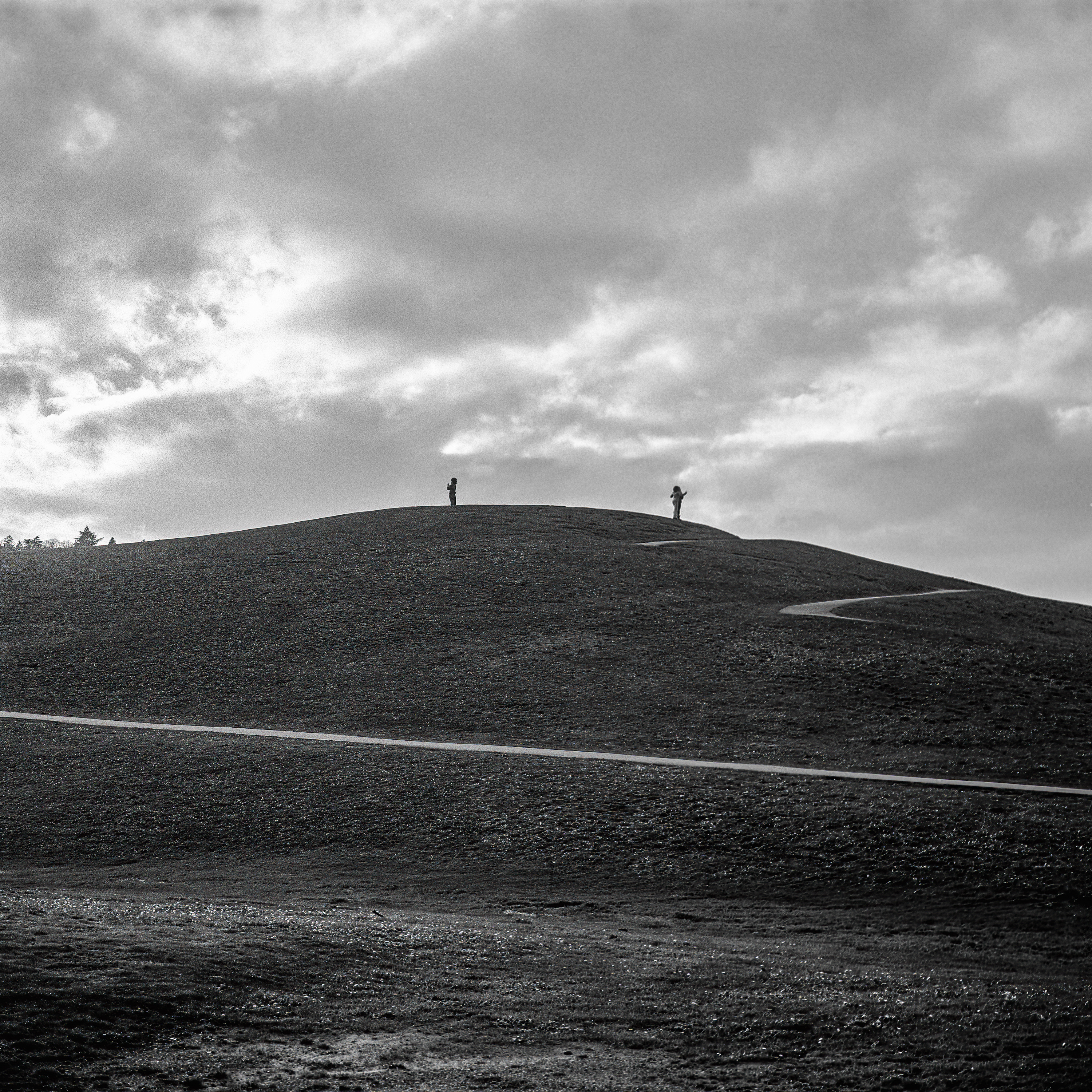
Gas Works Park
Ilford HP5 pushed through the quiet chemistry of Xtol — a deliciously gentle rebellion. Shooting this classic, grain-forward film and developing in a fine-grain developer tames the contrast without robbing HP5 of its soul: retaining textured grit, broad midtones, and forgiving highlight roll-off, but with cleaner blacks and more subtle shadow detail. In the Pacific Northwest light — fog-hung coastlines, wet streets, and low winter sun — the combo sings. Landscapes gain atmosphere without mud; portraits keep a tactile, analog intimacy; street frames retain snap and presence with less molecular noise.
In short: HP5 + Xtol is a rewarding compromise — the gritty character you expect, but with refined control. It’s ideal when you want the film’s expressive texture without a heavy-handed developer shouting over the scene.
Rust-streaked beams, latticed pipes, and the skeletal silhouettes of Gas Works Park make for a perfect playground when pairing Ilford HP5 with XTOL.
HP5’s gritty, contrast-ready grain sings against the park’s industrial geometry, picking out the soot-dark edges and weathered textures. Push or pull exposure to taste — HP5 tolerates drama and rewards bold metering with punchy midtones and a rugged character that suits the site’s raw lines.
Developing in XTOL smooths the grain just enough to keep details crisp in the steelwork and concrete, while preserving HP5’s classic black-and-white soul. XTOL’s gentle contrast control lets you coax subtle tonal gradations from rusty surfaces and glassy water reflections alike, so the chimneys and pipeworks retain nuance without getting crushed into blackout silhouettes.
Mamiya 6 MF | Ilford HP5 400 (@box speed) | Xtol 1:1 (for 12 minutes)